Background
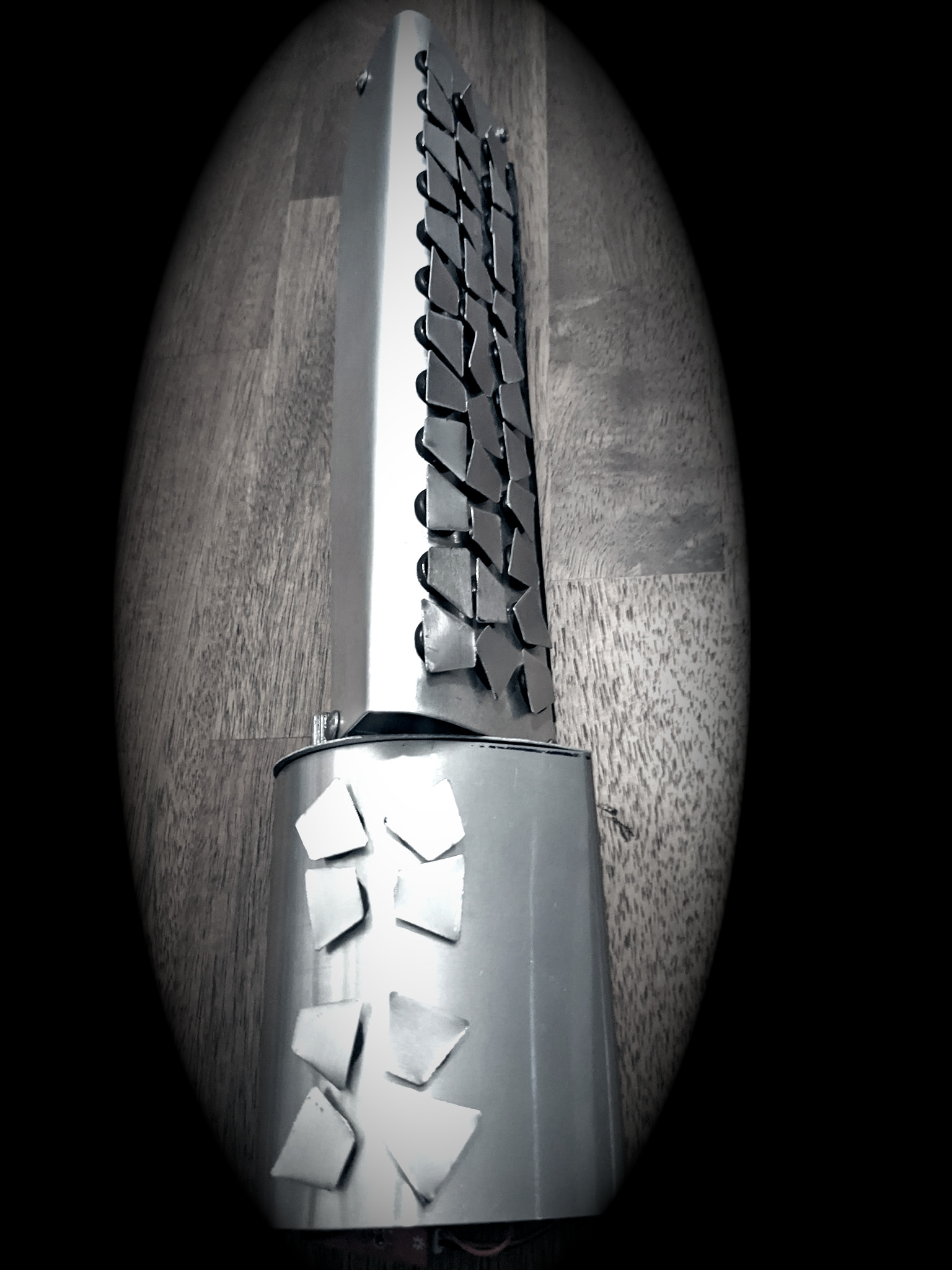
Early Explorations and the Quest for Organic Behavior:
My instrument-making journey began with the ambition to create every sound imaginable. This expansive goal, while theoretically possible, quickly proved impractical. It became clear that the true challenge lay not in creating every sound, but in creating every type of sound – a subtle but crucial distinction. This realization sparked an exploration into the nuances of sonic creation.
Early experiments focused on sampling, attempting to capture the organic behavior of acoustic instruments and instrumental combinations. This pursuit of “organic behavior” became central to my design philosophy. I sought to emulate the imperfections and inherent instabilities that give acoustic instruments their unique character. This early work laid the foundation for my understanding of what constitutes “organic” in an instrumental context: dynamic variation arising from the complex interplay of materials, construction, and player interaction, distinct from both sterile periodicity and unstructured randomness.
The Limitations of Extension and the Search for Dynamic Control:
As a guitarist, I was particularly fascinated by the expressive range of saxophonists. Initially, I explored extending the guitar’s capabilities through preparations, resynthesis, synthesis, and custom-built onboard controllers. However, these approaches, while interesting, ultimately proved limiting. They were still tethered to the guitar’s inherent constraints and lacked the dynamic responsiveness I sought. The ability to seamlessly transition between different playing techniques—bowing, plucking, striking—was absent. Furthermore, the added gear created portability issues, especially when traveling. These experiences highlighted the importance of portability and the ability to easily transition between sonic worlds.
The Strombophone (2009-2016): A Stepping Stone:
My first true instrument, the Strombophone, emerged from a residency at STEIM (2006 & 2007). Using affordable and readily available components—game controllers and a Wii-mote—it offered a significant number of control surfaces. Initially based on an extensive granular synthesis network, the Strombophone, while texturally rich, lacked versatility. Responding to this limitation, I redesigned the synth engine to incorporate analog synthesis and explored physical modeling techniques inspired by Perry Cook. This evolution led to a more versatile instrument, though initially at the cost of its unique textural character. The Strombophone also revealed a crucial design challenge: the need for discrete pitch control, something I had initially avoided. Ultimately, the Strombophone taught me the importance of expanding an instrument’s roles, the necessity of addressing pitch control, and the value of leveraging learned ergonomics.
The Phallophone (2016-2021): Refinement and Realization:
The Phallophone, built around a fretboard system with positional and pressure sensors, represented a significant step forward. Designed for the left hand like a guitar fretboard, with the right hand controlling timbre, it incorporated accelerometers for added expressiveness. Featuring 13 synthesizers, each manipulable in the same way, the Phallophone offered a unified control system. This instrument marked my first major project integrating embedded systems (Arduino/Teensy and Raspberry Pi). It was performatively successful, musically versatile, and enjoyed a long lifespan. However, the Phallophone’s reliance on 13 distinct synthesis techniques, while offering variety, ultimately felt like patch changes rather than fundamental sonic reinventions. Furthermore, its size, weight, and reliance on fragile, expensive sensors presented practical challenges. The continuous fretboard, while solving the ergonomic issues, also hindered intonation and ease of playing. The Phallophone demonstrated the possibilities of a unified control system and embedded synthesis but also highlighted the need for a simpler, more robust design with a more intuitive pitch system.
The Fryprone (2021-Present): Versatility, Accessibility, and Evolution:
The Fryprone represents a culmination of these design explorations. Built for versatility, adaptability, and accessibility, it prioritizes portability and durability. Its 48 capacitive touch sensors, arranged in a three-row layout, offer a unique approach to pitch and articulation. The left hand focuses on pitch, while the right hand, akin to a guitarist’s picking hand, controls articulation. Accelerometers capture gestural input, further enhancing expressiveness. Designed for both mono and multi-channel output, including immersive audio formats, the Fryprone is adaptable to diverse performance contexts. It incorporates concepts from acoustic instruments, such as harmonics and multiphonics, into its electronic design. The Fryprone is open-source, promoting community involvement and further development. Future iterations will explore modularity and expanded sensor capabilities. The Fryprone embodies a practical yet expansive approach to instrument design, emphasizing relational practice and material economy.
This journey of exploration, marked by both successes and challenges, ultimately led to the development of the Fryprone. The Fryprone represents a culmination of these design principles and a focused effort to address the limitations encountered in previous iterations. It embodies the core concepts that have consistently driven my work: the pursuit of organic behavior in synthesized sound, achieved through nuanced articulation and structured unpredictability; the versatility to explore diverse musical landscapes, tested by its capacity to realize concepts from Anthony Braxton’s Musical Language Types; and the ability to seamlessly transition between distinct sonic worlds, facilitating dynamic shifts in timbre and texture. Furthermore, practical considerations of cost, open-source principles, and tour-ability have been integral to the Fryprone’s design from its inception. The following sections detail how these principles manifest in the Fryprone’s hardware, software, and overall functionality.
Fryprone: Instrument and Purpose:
The Fryprone is an electronic instrument designed to capture the nuanced behavior and functional simplicity of acoustic instruments, while leveraging the expanded sonic possibilities offered by electronic sound. My approach is not to recreate existing acoustic instruments, but rather to create a new instrument that embodies the qualities that make acoustic instruments so compelling. This includes the inherent organic behavior of their sound, their versatility across musical styles, and their intuitive connection to the player.
The Fryprone is fundamentally a vehicle for my personal musical expression, a tool for articulating my unique sonic language. It’s conceived as a means of saying what I want to say, in the way I want to say it – much like developing one’s own spoken language. While the commercial success of an instrument, measured by its circulation, is often emphasized, my primary focus is on creating an instrument that serves my artistic needs. This is not to diminish the importance of sharing and accessibility, but rather to prioritize the instrument’s role as a personal expressive tool.
Several key aesthetic choices have shaped the Fryprone’s development:
- Organic Behavior: Acoustic instruments possess an inherent, dynamic inconsistency – a structured unpredictability – arising from the complex interaction of materials, construction, and the player. This “organic” quality is what I strive to capture in the Fryprone. The goal is not to replicate the exact sonic fingerprint of any particular acoustic instrument, but to emulate the character of this dynamic variation. Purely periodic or random synthesized sounds lack this crucial element. The Fryprone aims to create synthesized sounds with the same “structured unpredictability” found in acoustic instruments: sounds that evolve organically, with natural and connected variations.
- Versatility: The Fryprone is designed to be versatile, capable of exploring a wide range of musical landscapes, including those I may not initially anticipate. This versatility is tested by its ability to realize musical ideas inspired by diverse sources, such as Anthony Braxton’s Musical Language Types. This requires careful consideration of all aspects of sound propagation: pitch, timbre, articulation, time, and sustain.
- Sonic World Shifting: Just as a saxophonist seamlessly transitions between multiphonics, melodic material, and noisy textures, the Fryprone is designed for rapid transitions between distinct sonic worlds. This allows for dynamic shifts in timbre and texture, expanding the expressive possibilities of the instrument.
These aesthetic principles are complemented by practical considerations:
- Cost: The Fryprone prioritizes affordability through the use of readily available and inexpensive components.
- FLOSS: The instrument is designed with open-source principles in mind, utilizing free and libre software and hardware whenever possible.
- Tour-ability: Compact size, lightweight construction, and robust design make the Fryprone highly portable and tour-ready. Ease of repair is also a key consideration.
Fryprone: Technical Description and Key Components:
The Fryprone is an electronic instrument built around a lightweight aluminum body, 48 capacitive touch tiles (sometimes referred to as keys), and integrated accelerometers and gyroscopes. It features a minimal number of moving parts: a power switch and a single control knob that functions as a volume control. Its compact size (37cm in length) and robust construction make it well-suited for touring. An ESP32 microcontroller powers the instrument and acts as a Wi-Fi access point, sending control data wirelessly to a laptop for synthesis and processing.
Calibration: Upon connection, the Fryprone performs a calibration routine, combining pre-tuned elements with a dynamic system calibration. This hybrid approach ensures accurate and nuanced tuning, even in environments with fluctuating temperature, humidity, or electrical conditions.
Synthesis: The synthesis engine is based on a complex small wave band oscillator, which serves as the excitation source for a synthesis technique derived from Perry Cooke’s STK physical modeling. The Fryprone uses a single, highly versatile synthesis technique, focusing on exploring its full potential rather than relying on multiple, distinct patches.
Key Parts and Their Function:
- Capacitive Touch Tiles: The 48 capacitive touch tiles enable nuanced articulation through velocity and surface area data. Their fast response, lightweight nature, low cost, and lack of moving parts make them ideal for this application, although they require periodic tuning and calibration. (Why: Nuanced articulation, responsiveness, cost-effectiveness, durability)
- Left/Right Hand Articulation: Analyzing left and right-hand articulation separately allows for a wide range of expressive possibilities, mirroring the dynamics of acoustic instruments where each hand has distinct roles. (Why: Expressive possibilities, mirroring acoustic instrument dynamics)
- Accelerometers and Gyroscopes: These sensors are crucial for introducing organic behavior. Their delta data provides non-periodic information, adding a layer of natural variation to the electronic sound without replicating acoustic instrument behavior. (Why: Organic behavior, natural variation)
- Noise Elements: Three distinct noise elements contribute to the Fryprone’s organic character:
- Articulation Noise: Noise generated by the onset and offset of sounds.
- Sustained Noise: Noise present in sustained sounds.
- Imperfections: Variations and behaviors within the sound itself, analogous to the imperfections of different bore shapes in acoustic instruments.
- Modulation: Injects a variable amount of in-harmonic sound by modulating existing filters.
- The combination of these elements creates a rich and dynamic sonic landscape, opening up possibilities for extended techniques and new sonic explorations. (Why: Richer sonic landscape, extended techniques)“
Fryprone: Physical Construction:
The Fryprone’s body is constructed from lightweight aluminum, formed into two sections for ease of access and maintenance. The fretboard section comprises a single aluminum sheet with 36 drilled holes, each fitted with a grommet for electrical isolation. Capacitive touch tiles are affixed atop each hole, connected via wires to three MPR121 capacitive touch controllers housed within the cavity between the fretboard and the back plate. This cavity also contains the Wi-Fi antenna.
The flask section, designed for right-hand interaction, is joined to the fretboard section by a spring-loaded latch. Formed from a single piece of bent aluminum, the flask houses one MPR121 controller, a set of accelerometers and gyroscopes, a power switch, a control knob (volume), a LiPo battery, and the ESP32 microcontroller. An umbilical cord connects the two sections, carrying data, power, and the antenna signal. Twelve holes, each with an isolating grommet, accommodate the aluminum trapezoidal touch tiles, which are glued to the surface and connected via double-sided copper tape and solder.
Fryprone: Functionality and Control:
The Fryprone’s control scheme is designed for intuitive and expressive interaction, drawing inspiration from the dynamics of acoustic instruments while exploring new possibilities afforded by electronic technology.
- Left-Hand Control (Pitch and Articulation): The left-hand tiles, arranged in three rows of 12, serve as the primary interface for pitch and articulation control. Each tile represents a whole tone, with semi-tones achieved by activating adjacent tiles. This approach offers an economical use of sensors and democratizes pitch, avoiding the inherent centricity of a piano keyboard. Each row spans an octave and a minor 7th, and each row is an independent voice, spaced an octave and a 6th apart. Furthermore, the left hand controls articulation depending on if two notes in a row are depressed (legato) versus if the finger is removed from the previous note (marcato).
- Right-Hand Control (Timbre and Articulation): The right-hand interface is divided into two sections: the front (activated by the fingers) and the back (activated by the thumb). The eight front tiles closest to the palm act as activators and articulation controls. The tiles further away allow for portamento, while the last two tiles (pinky) serve as octave register keys. When both pinky keys are pressed, granular synthesis is activated. The thumb controls access to resonant filters and feedback networks, tremolo effects (amplitude modulation), harmonics, and reverb. Simultaneous activation of the harmonics and reverb tiles triggers a “pizzicato” mode, capturing only onset information for highly articulated sounds.
- Granular Synthesis: The granular synthesis engine offers two modes:
- Synchronous Granulation: A stutter-like effect synchronized across all three voices, with speed controlled by accelerometer data.
- Asynchronous Granulation: Triggered by shaking the instrument, initiating an asynchronous reverb that gradually slows down over time.
- Timbral Control (Right Thumb):
- Resonant Filters and Feedback Network: Inspired by Perry Cook’s physical modeling techniques, this control allows for the application of a feedback network and resonant filter, with the amount determined by accelerometer data. The frequency is calculated from both the harmonics position and the current pitch.
- Tremolo: Amplitude modulation controlled by an LFO, with the tremolo speed determined by instrument position and accelerometer data. Pre-gain tremolo allows for clipping effects when combined with increased gain.
- Harmonics: Modifies the center point of the oscillator, emphasizing different harmonics for timbral shifts and the ability to play “harmonics.” This is a set-and-forget parameter.
- Reverb: Controlled by the fourth thumb tile and instrument position (accelerometers). Offers a short default reverb (post-processing) and an extended reverb with ducking capabilities for new articulations. Can be used for spatial or textural effects.
- Articulation Matrix: Articulation is determined by a matrix combining left and right-hand activations, velocity, and skin contact (capacitance). The fastest articulation with the least physical input is classified as “strike,” with middle and low settings designated as “sustain.” The combination of these factors, along with “pizzicato,” “tremolo,” and gain, creates a wide range of articulation possibilities.
Fryprone: Synthesis Engine:
The Fryprone’s synthesis engine is designed to create a rich and dynamic sonic landscape, blending the precision of electronic sound with the nuanced variations of acoustic instruments.
- Oscillator and Noise: The synthesis begins with a small band complex oscillator, mixed with varying degrees of noise (sustain noise dependent on loudness and timbral state).
- Articulation and Envelopes: The resulting signal is then processed through articulation envelopes, which also introduce new types of noise, including Karplus-Strong synthesis.
- Sub-Octave and Feedback: A short delay network and sub-octave generator (amount controlled by accelerometer data) are applied. The mixed signal (oscillator, feedback, sub-octave) is then processed through the tremolo and/or feedback network (controlled by right thumb).
- Granular Synthesis: The signal is then routed to the granular synthesis engine, if activated.
- Output Processing: The synthesized sound is processed through a series of resonant filters (always active, with increased resonance controlled by right thumb), a first stage of waveshaping (responding to amplitude data), and a second stage of “scream protection” to mitigate high frequencies.
- Final Processing: The three synthesized voices are combined and sent through the reverb with ducking, a final stage of post-gain waveshaping, and then to various output options.
Accelerometer Data and Expression:
The accelerometers play a crucial role in translating physical gestures into sonic expression. “Expression,” in this context, refers to the perceived connection between sound and the performer’s physical actions. The accelerometer data allows for rapid input of highly variable data, controlling parameters such as resonance, feedback, harmonic pitch centricity, and reverb. Y-axis position controls amplitude, with increased amplitude adding more waveshaping to the signal. This waveshaping affects every stage of the signal flow and introduces a third dimension of noise in response to the signal.
In a nutshell…
The Fryprone stands as both a synthesis and a distillation of a decade and a half of instrument-making—an evolving response to the persistent tension between expressive nuance and technological abstraction. Through successive iterations, each informed by a desire to push beyond the limitations of traditional and experimental interfaces, I arrived at an instrument that doesn’t merely imitate the behavior of acoustic sound-makers but embodies their core principles: responsiveness, unpredictability, and intimate control.
What sets the Fryprone apart is its commitment to organic behavior—not as mimicry, but as an ethos of design. It is a system where sound arises not from static parameters but from dynamic interaction: between gesture and response, between structure and accident, between player and machine. At the same time, it reflects a pragmatic awareness—of the need for portability, open-source sustainability, and integration into real-world performance contexts.
In embracing a singular synthesis engine, relational playing modes, and a radically ergonomic interface, the Fryprone becomes not just a tool, but a vocabulary—an instrument that evolves alongside its player. Its development illustrates that the goal of new instrument design is not merely to expand sonic possibility, but to deepen expressive coherence. Ultimately, the Fryprone is less about the sounds it can make than about the ways it enables sound to be made: idiosyncratically, intentionally, and with a sense of shared agency between performer and instrument.
As the project continues to evolve—through modularity, expanded sensor integration, and community engagement—the Fryprone remains an open invitation to rethink what it means to design, build, and play an electronic instrument in the 21st century.
 Dirk Johan Stromberg
Leave a comment